New Taxi Leaks

Thursday, 27 January 2022

Gunpowder Plot, January 27th 1606


January 27th 1606: The one-day trial of Guy Fawkes and his fellow conspirators at Westminster Hall. It opened with the indictment that the plotters:

“traitorously amongst themselves didst conspire, conclude and agree, with gunpouder, as it were with one blast, suddenly, villainously and barbarously to blowe up and tear in pieces our said sovereign Lord the King.”

They were charged with treason for plotting & attempting to blow up the Houses of Parliament on November 5th 1605. 

The sentencing powers available to the judges were somewhat more robust in those days - Fawkes & co were hanged, drawn and quartered in Old Palace Yard a few days later.

Source :Maybe it's because I'm a Londoner, Ian A Biddell.

Saturday, 8 January 2022

THE 1940s LONDON BLACKOUT RIPPER

Just fifty-four years after the notorious ‘Jack the Ripper’ waged his merciless trade in cutting up to five women on the streets of London, another spree killer appeared in the shadows. This monster attacked women over six days during a cold February 1942. He was eventually caught and identified as 27-year-old Gordon Frederick Cummins. 

From the start of World War II, London’s streets and buildings were kept dark as a precaution against aerial bombing by the Luftwaffe. Street lamps were not lit, the windows of houses, shops, offices and factories were blacked out. 

During 57 successive days of aerial bombing, the blackout’s strict rules allowed the psychopathic Cummins to carry out his orgy of obscene violence against women who were going about their business. As the bombs fell, in six days in February 1942, Cummins murdered four women and attacked two others. 

Three of his victims were mutilated after death. The newspapers dubbed him ‘The Blackout Ripper.'

On Sunday, February 9, teacher Evelyn Hamilton’s body was discovered in an air raid shelter in Montagu Place, Marylebone. Someone had strangled her. There were no signs of sexual assault.

On Monday, February 10, prostitute Evelyn Oatley was found dead. Two gas meter readers discovered her as they were let into her Soho flat in Wardour Street. The butchered body of 35-year-old Evelyn Oatley was a horrifying sight. This time, the victim was so viciously slashed that her injuries even shocked the investigating officers. While she was still alive, Cummins abused her private parts with curling tongs. Her throat had been cut; she was naked and her body had been sexually mutilated with a tin opener. The tin opener was found close by, covered in Oatley’s blood. It provided vital fingerprints in the investigation. An examination of her body also yielded the fact the killer was left-handed.

The next day, Tuesday, February 11, another prostitute, Margaret Florence Lowe, was murdered in her Gosfield Street flat. She had been strangled with a silk stocking and mutilated with both a knife and razor blade. Her body was not discovered until three days later. 

After examining this victim’s body, the pathologist stated the murderer was a savage sexual maniac. The similarities between the killings and mutilations convinced the police that the same killer was responsible.

On Wednesday, February 12, Mrs Doris Jouannet was murdered in her two-room ground-floor flat in Paddington she shared with her husband. Jouannet was in the habit of picking up servicemen in Leicester Square. She had been strangled and her naked body had been sexually mutilated. The abuse was so severe and revolting that the pathologist examining the victim described Gordon Cummins as ‘a savage sexual maniac.’

On Friday, February 14, near Piccadilly Circus, Greta Hayward was attacked. A delivery boy on his rounds interrupted her assailant and Hayward was able to escape. Cummins fled - but left his RAF-issue gas mask behind at the scene.

The number on the mask was easily traced and linked to Cummins, but even as the police were working on the lead, he struck again. A prostitute called Catherine Mulcahy was attacked in her flat near Paddington Rail Station. She resisted Cummins so effectively that he abandoned his murderous intentions and gave her an extra £5 and left quickly.

On February 16, the police arrested Cummins in the St. John’s Wood district. His fingerprints matched those on the bloody tin opener and a search of his quarters turned up several items that belonged to his victims.

Cummins went to trial for his murder spree on April 27; during this time, he wrote a letter to his wife that seemed to imply he might’ve blacked out whenever he started killing. Nevertheless, it took the jury 35 minutes to find him guilty, and he was sentenced to death by hanging. Cummins was executed at Wandsworth prison on June 25, ironically during an air raid. After his execution, a fifth body was discovered and attributed to him. The woman was identified as a Mrs Church and was thought to have been killed in October 1941.

Sunday, 28 November 2021

Electric Delivery Vehicles: Is History About To Repeat Itself ???


In 1939 Harrods introduced a fleet of 50 electric delivery vans which had a range of about 60 miles between charges and could do 18 mph 


In 1951, dairies around London developed a cheaper version of the Van (the electric milk float, 3 wheels, chain driven) which had a smaller battery and a range of 16 miles. 


By 1967, the uk had more electric milk floats than the rest of the world combined.


My uncle Patsy drove a Harrods electric van in the early 60s and he would let me sit on his lap and drive it up and down Kilburn Park Road.


Many companies today are now looking to reintroduce the electric delivery vans based on the design of the old milk floats… which could be produced much cheaper than the modem electric hybrid commercial versions). As we’ve seen in the past from Harrods, they make fantastic online delivery vehicles which are completely exempt from the ULEZ charge (but knowing Sadiq Khan as we do, that could all change).


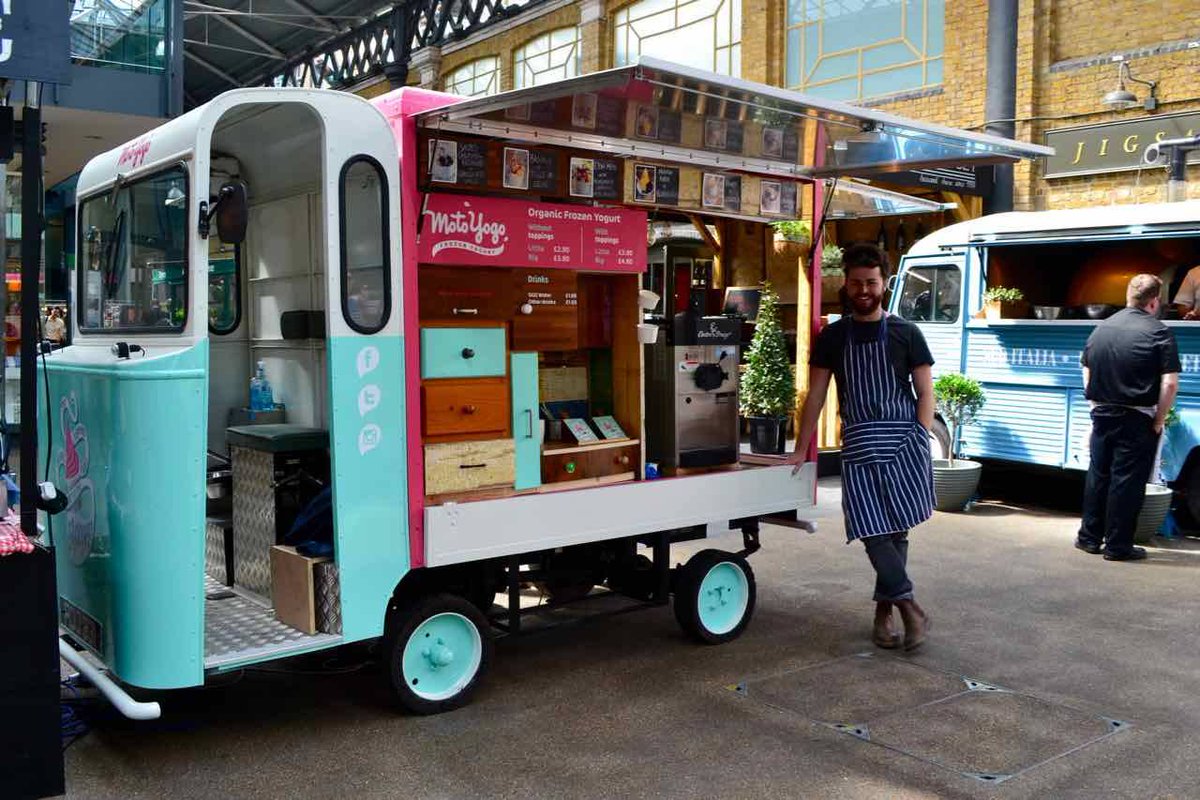
Some old restored milf floats can still be found around the UK, used as coffee/tea/flower stalls in market areas.


The last Harrods delivery van was taken out of service in 1970 and presented to a transport museum and was still in perfect working order when decommissioned. 


The TXe London’s most expensive Taxi ever produced, has a range of about 50 miles in fully electric mode, unless passenger wants heater or AC on! 


Not really leaps and bounds in technology, in 70 odd years!!!


Monday, 22 November 2021

Something different the children can do…build your own oxygen production unit 😜

Planting pine trees can provides shade, windbreaks and screening in the environment.

They can also offer us some less obvious benefits such as the soothing sounds of wind through the pine branches and aromatic fragrances from leaves and sap.  I personally love pine trees because they always remind me of Christmas time.

There are about 114 species of pines, native mostly to the Northern Hemisphere. They do grow throughout the world though mainly as ornamentals.

I came across a post on Facebook today that I thought you might like too.

It shows how we can grow our own pines in only 5 simple steps.

1. Go to the woods. Find a few pinecones.

🌲🌲🌲

2. Put the pinecone in a pot with compost- so that most of it stands out.

3. Every day, just give it a small amount of water, as excess water will make the pinecone rot.

4. After some time, a tiny tree(trees) will appear.

5. Congratulations - the new trees will start oxygen production and you will have a piece of forest in your own home

πŸπŸ‚πŸƒ.

You're doing something for nature, and you'll see what nature does for you ❤️


Tuesday, 16 November 2021

One More For The Road, Highwayman Jack Sheppard

November 16th 1724:  Jack Sheppard, Stepney born highwayman & housebreaker, was hanged at Tyburn in front of 200,000 spectators. Born into a poor family, he was apprenticed as a carpenter but took to theft and burglary. 

He was arrested and imprisoned five times in 1724 but escaped four times from prison, making him a notorious public figure, and wildly popular with the poorer classes. 

By the time Sheppard's execution cart arrived at Tyburn, Jack was almost insensible from the vast quantity of grog and ale given to him at several inns and taverns as their traditional sending-off gift of 'One More For The Road', by some accounts, Sheppard had to be supported for the noose to be placed.

Sheppard's life story was an inspiration for William Hogarth's 1747 series of 12 engravings, titled 'Industry and Idleness', which shows the descent of an apprentice into crime and eventually to the gallows.

The Amazing Escapes of Jack Sheppard

Jack Sheppard was the 18th century’s most notorious robber and thief. His spectacular escapes from various prisons, including two from Newgate, made him the most glamorous rogue in London in the weeks before his dramatic execution.

Jack Sheppard (4 March 1702 – 16 November 1724) was born into a poor family in Spitalfields in London, an area notorious for highwaymen, villains and prostitutes in the early 18th century. He was apprenticed as a carpenter and by 1722, after 5 years of apprenticeship, he was already an accomplished craftsman, with less than a year of his training left.

Now 20 years old, he was a small man, 5’4″ tall and slightly built. His quick smile, charm and personality apparently made him popular in the taverns of Drury Lane, where he fell in with bad company and took up with a prostitute called Elizabeth Lyon, also known as ‘Edgworth Bess’.

He threw himself wholeheartedly into this shady underworld of drinking and whoring. Inevitably, his career as a carpenter suffered, and Sheppard took to stealing in order to boost his legitimate income. His first recorded crime was for petty shoplifting in spring 1723.

Jack Sheppards first escape CCIt was not long before he met and fell in with local villain Joseph Blake, known as ‘Blueskin’. His crimes escalated. He was arrested and imprisoned five times between 1723 and 1724 but escaped four times, making him notorious yet extremely popular especially amongst the poor.

His First Escape, 1723.

Sent to St Anne’s Roundhouse for pick-pocketing, he was visited there by Bess Lyon who was recognised and also arrested. They were sent together to New Prison in Clerkenwell and were locked in a cell known as The Newgate Ward. The next morning Sheppard filed off his fetters, made a hole in the wall and removed an iron bar and a wooden bar from the window. Tying sheets and blankets together, the pair lowered themselves to the ground, Bess going first. They then climbed over a 22-foot-high wall to make good their escape, quite a feat considering Jack was not a tall man and Bess was quite a large, buxom woman.

His Second Escape, 30th August 1724.

In 1724, having been convicted of burglary, Jack Sheppard found himself under sentence of death. In Newgate in those days there was a hatch with large iron spikes opening into a dark passage,

which led to the condemned cell. Sheppard filed away one of the spikes so that it would easily break off. In the evening two visitors, Bess Lyon and another prostitute, Moll Maggot, came to see him. They distracted the guard whilst he removed the spike, pushed his head and shoulders through the space and with the help of the two women, made his escape. This time his slight frame was to his advantage.

He was however, not free for long.

His Last and Most Famous Escape, 15th October 1724

Jack Sheppards third escape CCJack Sheppard made his most famous escape, again from Newgate Prison, between the hours of 4pm and 1am on 15th October. He succeeded in slipping off his handcuffs and with a crooked nail, picked the padlock securing his chain to the floor. Forcing several locks, he scaled a wall and reached the roof of the prison. Returning to his cell for a blanket, he then used it to slide down the roof and onto a neighbouring roof. Climbing into the house, he escaped through the front door, still wearing his leg irons.

He persuaded a passing shoemaker to remove the leg irons but was later apprehended, less than two weeks later, too drunk to resist arrest.

Daniel Defoe, the author of Robinson Crusoe, was so entranced by Jack Sheppard’s daring escapes that he ghostwrote his autobiography, A Narrative of all the Robberies, Escapes etc. of John Sheppard, in 1724.

Sheppard was convicted and sentenced to be hanged at Tyburn, ending his short criminal career. He was such a popular rebel hero that the route to his execution was lined by weeping women dressed in white and throwing flowers.

However Sheppard had planned one last great escape – from the gallows.

In a scheme involving Daniel Defoe and Appleby, his publisher, it was planned that they would retrieve the body after the requisite 15 minutes on the gallows and try to revive him, as in rare cases it was possible to survive a hanging. Unfortunately the crowd were unaware of this plan. They surged forward and pulled on his legs to ensure their hero a swift and less painful death. He was buried that night in the graveyard of St Martin-in-the-Fields.

Sheppard was famous for his daring escapes from prison. So much so, popular plays were written and performed after his death. The character of Macheath in John Gay’s The Beggar’s Opera (1728) was based on Sheppard. Then in 1840 William Harrison Ainsworth wrote a novel called Jack Sheppard. This novel was so popular that the authorities, in case people should be incited to crime, refused to license any plays in London with “Jack Sheppard” in the title for a further forty years.


Saturday, 2 October 2021

The Longest Boxing Match in History 7 hours and 19 minutes for $2,500 in 1893

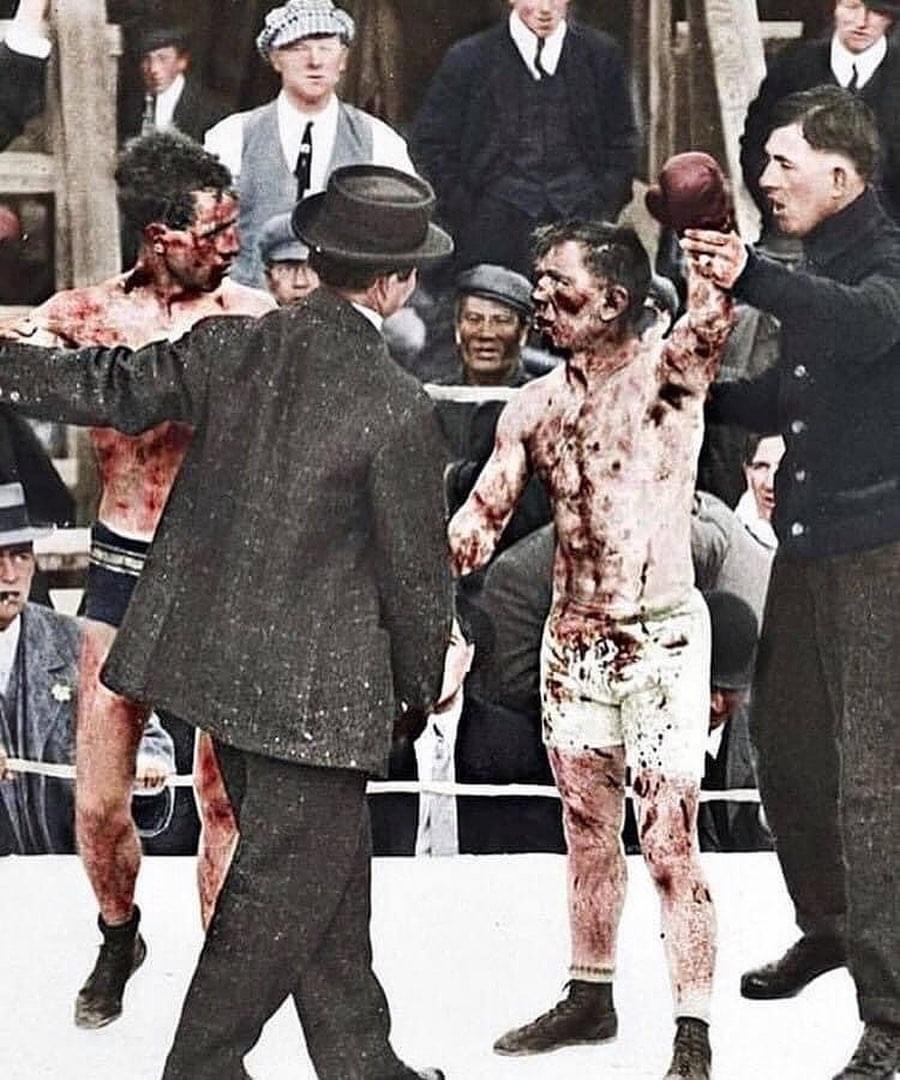
This is what two boxers looked like after a fight that lasted 110 rounds! 

Yes, you read it correctly, 110 rounds (7h 19m of fighting). 

It was April 6, 1893, Andy Browen vs. Jack Burke. This is of course the longest boxing fight in history!

History has definitely presented us with some incredible fights, be it in sporting events or even war, and from this, we are able to admire how amazing the human race really is. 

However, there are some events in which some determine people keep on fighting even after they have collapsed more than ten times. 

This motivation or desire to win is usually created by a reason or a person to fight for, however, this case was a bit different.

April the 6th, 1893, marks a date that has entered not only in history books but also in the Guinness World Records book as the day the longest boxing match took place. 

This match was between Andy Bowen and Jack Burke at the Olympic Club in New Orleans (Louisiana, USA). 

This was the final fight in a tournament to win the title of Lightweight Champion of the South.

More attractive to all the contenders, was the large cash prize of $2,500. Today, that may not seem very much for a boxing championship, however, taking inflation into consideration, today we would be looking at $51,642, and back in 1893, this was a very big amount of cash. 

To give you an even better perspective, the average price of a medium-size house at the time in America was around $3,000.

Determination from both contenders

The fight started at exactly 9 PM that day and lasted until the next day at 4 AM. 

Both fighters were described as very energetic and as possessing an “undefeatable” will to win the big prize. Everyone was amazed at the endurance both competitors showed even past the 20th round. 

On the 25th round, Bowen knocked Burke down, however, he was saved by the bell as the referee only counted to seven.

You could only imagine the bruises on each of the fighters. It was said that around round forty-five, both fighters had broken their hands, despite how good the gloves were, no boxing equipment was made to last for so long. 

During the fight, both boxers knocked the other one down several times, but they managed to get back up before the referee counted to ten.

At a certain point, due to the injuries both fighters suffered and their fatigue, talent and skill didn’t matter anymore, it was all about the will to fight. 

Most of the spectators fell asleep as it was already midnight and the match wasn’t even halfway over.

From round 105 no punches were even being thrown and by the 108th round, the two fighters were just circling each other. 

Those who witnessed this fight, and especially the referee, mentioned that there probably never existed two fighters so stubborn and determined to win.

By round 110, the referee, John Duffy, who had had enough, put both fighters and everyone else attending the match — which had already lasted more than seven hours — out of their misery and called the match a draw. 

Both fighters received the title of Lightweight Champions from the South and split the cash prize, each taking $1,250 home (better than nothing after so many bruises and broken bones).

The birth of boxing rules

The Broughton’s rules were put forward by Jack Broughton in 1743 in the desperate attempt to avoid death in the ring. 

This set of rules mainly included the famous “no hitting below the belt” rule as well as the ten seconds for a fighter to get back up from a knockdown, which at the time was actually thirty seconds.

The “Queensberry Rules” as they are known, which followed, were actually created by John Graham Chambers and published by John Sholto Douglas (the ninth Marquess of Queensberry) in 1867, however, they were not yet respected by the world of boxing and so the longest fight in History, was in fact, outside the rule of the Marquess of Queensbury.

The new rules stated that a boxing match could last no longer than twelve rounds…that each round will last exactly three minutes, and that between each round there must be a one-minute break.

Sunday, 19 September 2021

The Dark Secret Of Westminster Bridge House And Kings Cross Necropolis Stations

The London Necropolis Railway was a railway line opened in November 1854 by the London Necropolis Company (LNC), to carry corpses and mourners between London and the LNC's newly opened Brookwood Cemetery 23 miles (37 km) southwest of London in Brookwood, Surrey. 

At the time the largest cemetery in the world, Brookwood Cemetery was designed to be large enough to accommodate all the deaths in London for centuries to come, and the LNC hoped to gain a monopoly on London's burial industry. 

The cemetery had intentionally been built far enough from London so as never to be affected by urban growth and was dependent on the recently invented railway to connect it to the city.

The railway mostly ran along the existing tracks of the London and South Western Railway (LSWR) but had its own branches from the main line at both London and Brookwood. 

Trains carried coffins and passengers from a dedicated platform in  Waterloo, London, using the LSWR tracks. 

On reaching the cemetery, the trains reversed down a dedicated branch line to two stations in the cemetery, one for the burial of Anglicans and one for Nonconformists (non-Anglicans) or those who did not want a Church of England funeral. 

The station waiting rooms and the compartments of the train, both for living and for dead passengers, were partitioned by both religion and class to prevent both mourners and cadavers from different social backgrounds from mixing. 

As well as the regular funeral traffic, the London Necropolis Railway was used to transport large numbers of exhumed bodies during the mass removal from a number of London graveyards to Brookwood.

The company failed to gain a monopoly of the burial industry, and the scheme was not as successful as its promoters had hoped. 

While they had planned to carry between 10,000 and 50,000 bodies per year, in 1941 after 87 years of operation, only slightly over 200,000 burials had been conducted in Brookwood Cemetery, equalling roughly 2,300 bodies per year.

On the night of 16–17 April 1941, the London terminus was badly damaged in an air raid and rendered unusable. 

Although the LNC continued to operate occasional funeral services from Waterloo station to the Brookwood railway station , the London Necropolis Railway was never used again. 

Soon after the end of the Second World War the surviving parts of the London station were sold as office space, and the rail tracks in the cemetery were removed. 

The part of the London building which housed the LNC's offices survives today as Westminster Bridge House. 

The two stations in the cemetery remained open as refreshment kiosks for some years afterwards but were subsequently demolished. The site of the northern station, serving the Nonconformist cemetery, is now heavily overgrown. The site of the southern, Anglican, station is now the location of a Russian Orthodox monastery and a shrine to King Edward the Martyr, which incorporate the surviving station platform and the former station chapels

THOMAS THE TAXI’s Extra Bit :

The London Necropolis Railway wasn’t the only railway of the dead. There was in fact a second one from Kings Cross To Colney Hatch. 

Although the necropolis railway at Waterloo Station running out to Surrey is quite well known, its northern counterpart is seemingly largely forgotten – although not surprising as there is almost nothing left of the railway component to point out to local visitors/tourists.

As the Waterloo railway transferred the dead all the way out to Woking, the cost for the service was out of the reach of the average poor, so to offer a cheaper alternative, the Great Northern London Cemetery Company was set up in 1855.

It cut costs in part by putting its cemetery much closer to London so that the rail fare could be more affordable. In fact it was so close to London, that today it is inside London, at what is now New Southgate.

The departure point at King Cross was to the north of the modern station, on what is today a little noticed side road. The building itself has long since vanished

Watch this fascinating video which tells the whole story of Londons railways of the dead.